
Lower Back Pain From Office Work? What to Do About It
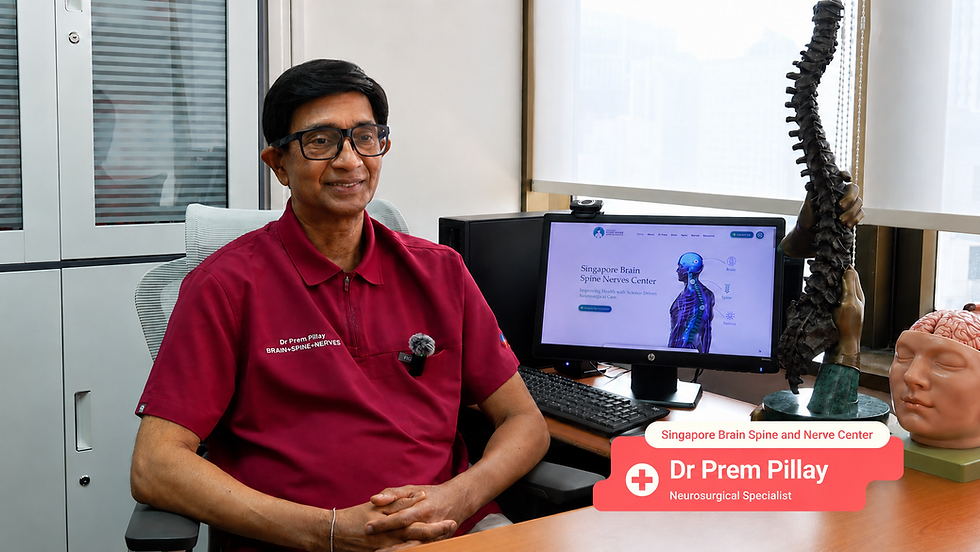
Clinical insight from Dr Prem Pillay of Singapore Brain Spine Nerves Centre. Watch his full interview on FindClinic.sg.
It often starts subtly. A small tightness at the end of a long workday. A pulling sensation when you stand up from your chair after a meeting. A dull ache that lingers into the evening, until somehow it has become part of your routine.
For many office workers in Singapore, lower back pain has become an unwelcome companion. It shows up after hours at your desk. It worsens during deadlines. It eases on weekends, only to return on Monday morning.
You may have tried adjusting your chair. Stretching at your desk. Switching to a standing desk for a few weeks. And yet, the ache keeps coming back.
If you have been searching for answers about lower back pain in office workers in Singapore, you are far from alone. Back pain is one of the most common reasons working adults seek medical attention, and the causes are often more nuanced than just "sitting too long".
At Singapore Brain Spine Nerves Centre (SBSNC) in Mount Elizabeth Medical Centre, Dr Prem Pillay sees patients across the full spectrum of back pain, including office workers whose pain has slowly worsened despite their best efforts.
Why office work is hard on the lower back
The human spine was not designed for prolonged sitting. When you sit, the discs in your lower back bear more pressure than when you stand or walk. Add in hours of stillness, poor posture, and a workplace setup that may not suit your body, and the strain accumulates over time.
Three main factors typically contribute to lower back pain in office workers.
Prolonged sitting
Sitting for several hours without breaks compresses the discs of your lower spine and reduces blood flow to the surrounding muscles. Over time, this can weaken the muscles that support the spine.
Poor posture
Slouching, leaning forward toward a screen, or sitting with crossed legs places uneven pressure on the lumbar spine. Even small posture issues, repeated daily, can have a real impact.
A suboptimal workstation.
A chair that is too low, a screen that is too high, a keyboard placed too far away, or a desk that does not allow proper foot positioning can all contribute to back pain over time.
The challenge with office back pain is that it usually builds gradually. Most people do not notice the damage being done until the discomfort is already disruptive.
Common causes of back pain in office workers
While prolonged sitting is the most obvious culprit, the actual sources of pain can vary.
Muscle strain from poor posture or sudden movement
Disc-related pain from compression of the lumbar discs
Sciatica, where a nerve in the lower back is irritated and causes pain that travels into the leg
Joint stiffness in the small facet joints of the spine
Weakened core and back muscles that no longer support the spine effectively
Stress and tension, which can worsen existing back pain
A proper assessment can help identify which of these factors is most relevant to your situation, and which treatment direction makes sense.
How to tell when back pain is more than just office strain
Most cases of office-related back pain settle with rest, gentle movement, and improvements to your workstation.
However, some signs may suggest something more is happening and warrant medical attention:
Pain that radiates down one or both legs
Numbness, tingling, or weakness in the legs or feet
Pain that wakes you from sleep
Pain that does not improve after 2 to 3 weeks of self-care
Loss of bladder or bowel control (this requires urgent medical attention)
Unexplained weight loss alongside back pain
A history of cancer with new back pain
If any of these are present, a specialist assessment can help clarify what is happening and what to do next.

Practical ways to ease office back pain
If your back pain is mild and recent, small changes often go a long way. The following are general strategies that may help.
Improve your workstation setup.
Your chair should support the natural curve of your lower back. Your feet should rest flat on the floor or a footrest. Your screen should be at eye level. Your keyboard and mouse should be close enough that your elbows can stay bent at roughly 90 degrees.
Move regularly.
Standing up briefly every 30 to 45 minutes helps reduce disc pressure and restore blood flow. A short walk to the printer or pantry counts.
Strengthen your core gently.
A stronger core and back muscles offer better support for the spine. Activities like Pilates, yoga, or simple bodyweight exercises can help over time.
Stretch during the day.
Gentle stretches for the lower back, hips, and hamstrings can ease tension. Many short stretch sessions are usually more helpful than one long session.
Watch your sleeping position.
Sleeping on your back with a pillow under your knees, or on your side with a pillow between your knees, may help reduce overnight strain on the lower back.
Address stress.
Stress increases muscle tension, including in the back. Sleep, exercise, and time away from screens all help.
These steps may help, but they are not a substitute for medical assessment if pain persists or worsens.
When to see a specialist for back pain
You may want to consider a consultation if:
Your back pain has lasted more than 2 to 3 weeks despite self-care
You are using painkillers regularly to manage daily activities
Pain affects your sleep or daily routine
You experience numbness, tingling, or weakness
Pain is interfering with work, family time, or exercise
You want to understand what is causing the pain rather than just treat the symptoms
A neurosurgical or spine specialist assessment can help identify the source of pain, rule out serious causes, and guide a treatment plan tailored to your situation.
Frequently Asked Questions
Why does my back hurt from sitting at the office?
Prolonged sitting compresses the lumbar spine and reduces blood flow to supporting muscles. Combined with poor posture and an unsuitable workstation, this often leads to gradual back pain over time.
Can sitting too long actually damage my spine?
Prolonged sitting compresses the lumbar spine and reduces blood flow to supporting muscles. Combined with poor posture and an unsuitable workstation, this often leads to gradual back pain over time.
How long should I wait before seeing a specialist for back pain?
Most mild back pain settles within 2 to 3 weeks with rest and self-care. If pain persists beyond that, worsens, or comes with leg symptoms, a medical assessment is recommended.
Is a standing desk better for back pain?
tanding desks can help, but standing all day is not necessarily better than sitting all day. The key is variety. Alternating between sitting and standing, with movement breaks, is usually more helpful than committing to one posture.
What is the best office chair setup for back pain?
A chair with good lumbar support, adjustable height that allows your feet to rest flat, and armrests that support your elbows at 90 degrees is generally recommended. Your screen should be at eye level to avoid leaning forward.
Can stress really cause back pain?
Yes. Stress increases muscle tension, including in the lower back. Many office workers notice their pain worsens during high-pressure work periods.
Meet Dr Prem Pillay
Back pain that has become part of your routine deserves more than another stretching video or new chair. A proper assessment can help you understand what is really happening, and what can be done about it.
Dr Prem Pillay is a Senior Consultant Neurosurgeon at Singapore Brain Spine Nerves Centre (SBSNC), located at Mount Elizabeth Medical Centre. With over 30 years of experience and qualifications including MBBS (Singapore), FRCS (Edinburgh, UK), FAMS (Neurosurgery), FACS (USA), and FRCS Canada (Neurosurgery), he has trained at internationally recognised institutions including Cleveland Clinic, Mayo Clinic, and MD Anderson Cancer Center.
Dr Pillay is also featured on FindClinic.sg, Singapore's healthcare editorial discovery platform that connects patients with verified specialist doctors through profiles, articles, and video interviews.
You can:
Read Dr Prem Pillay's full profile and video interview on FindClinic.sg
Learn more about FindClinic.sg, Singapore’s healthcare editorial discovery platform.
When you are ready
A consultation is a conversation. You bring your symptoms, your daily routine, and your questions. Dr Pillay brings the time, experience, and clear perspective to help you understand what is happening and what can be done.
To book a consultation with Dr Prem Pillay at Singapore Brain Spine Nerves Centre, call +65 6835 4325 or WhatsApp +65 9725 5373.


