New Concepts in the Treatment of Degenerative Spinal Disease
Updated: Jun 17, 2025
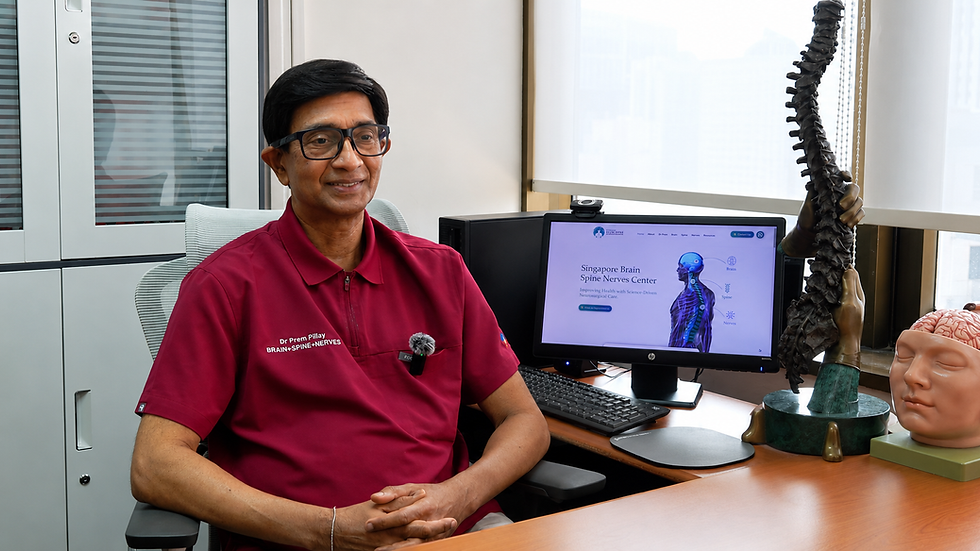
Dr. Prem Pillay , Singapore Brain Spine Nerves Center, Singapore
Senior Consultant Neurosurgeon with super speciality training in Neurosurgical Oncology
(Fellow at MD Anderson Cancer Center and Hospital, U of Texas, USA)

Spinal degenerative conditions have been treated mainly by routine physical therapy and analgesics. Patients who have failed conservative treatment have been treated with surgery including discectomy and fusion. Unfortunately, the overall results of such treatments has not been good enough; although perhaps acceptable in the 20th century.
There are now modern and technologically more advanced options for our patients with degenerative disc disease, spinal stenosis and segmental instability.
In our own practice, one advance has been the development of a multidisciplinary spine and pain center. In this one stop center, the patient has access to the full range of specialties needed for successful spine treatment. This includes neurosurgery, orthopedic surgery, pain management, neurology, neuro-radiology, neuroanesthesiology, physiotherapy, pharmacetics / pharmacology and psychology.
In the initial stages for patients with milder problems, the proper selection of pain medications together with more advanced physiotherapy including aquatherapy/aquaphysio is recommended. Patients who do not benefit from the initial spine therapy program will be reviewed by the team and additional tests or MRIs may be done. Selected patients may then benefit from pain procedures, such as nerve blocks (epidural, facet, nerve root, etc.).
There is also a group of patients who may benefit from disc interventions such as Discoplasty / Nucleoplasty. These interventions are carried out under local anesthesia as needle procedures with image-guidance including biplanar fluoro and 3D CT guidance.
For those patients in whom surgery is felt to be the better option, there are less invasive options as well. Microsurgery, Endoscopic Microsurgery and Microsurgical Spinal Decompression which can relieve and release spinal cord/nerve root/cauda equine pressure can now be supplemented by non-fusion technologies to strengthen the spine. Fusion can be avoided in an increasing number of surgical candidates. Fusion at any one level of the spine has been shown to increase stress and degeneration at adjacent segments. Fusion disease is also difficult to treat. Dynamic implants are now an important part of spine surgery and allow a return to more normal spinal dynamics.
Intraoperative image guidance and neuro-monitoring together with advances in microsurgery (including now robotics) are also making contributions to better results and increased safety in spinal surgery.
Dr. Prem Pillay is a Senior Consultant Neurosurgeon at Singapore-Brain-Spine-Nerves Center of Mount Elizabeth and Gleneagles Medical Centers, Singapore.
For more information about this, visit neurospine.blogspot.com.